Untitled Wall Painting (Total Revolution)
- Artist: Gardar Eide Einarsson
- Creation date: 2001
About
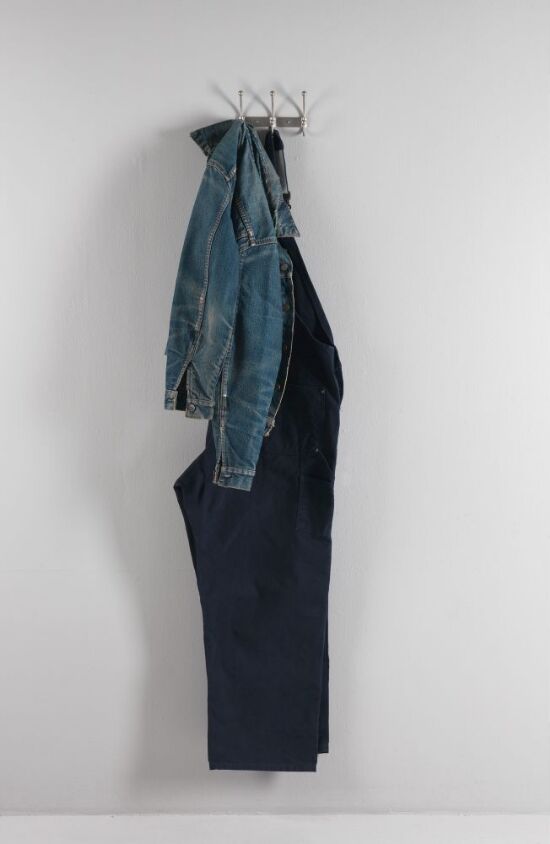
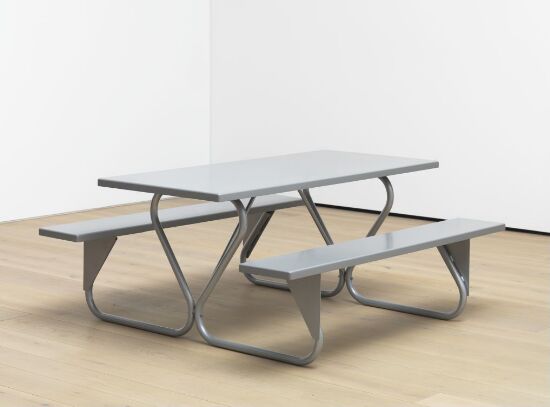
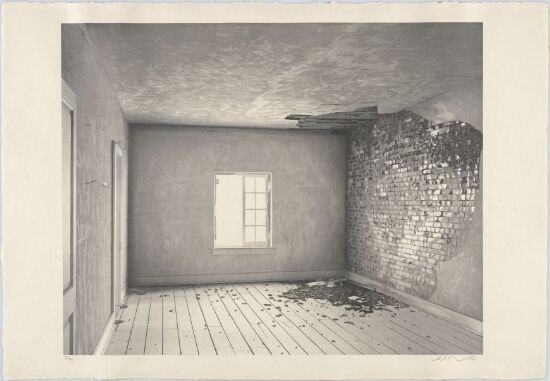
Gardar Eide Einarsson studied art in Norway, Frankfurt and New York. His work is marked by an ambiguous relation towards different countercultures and their manifestations. It is unclear if his works are fuelled by sheer fascination or critical investigation towards these phenomena.
Einarsson is particularly interested in outsiders who fight for a radically different society. His references range from punk to terrorism, including serial murderers and dictators. The figure of the outlaw that Einarsson refers to is a lawless dissident marked by radical individualism and opposition towards the existing. Einarsson is particularly interested in the individual’s struggle for freedom, threatening the centralized power of our surveillance societies. By citing these expressions of radical opposition as art works, Einarsson deliberately fetishizes and perpetuates the myth of rebellion and the figure of the outlaw.
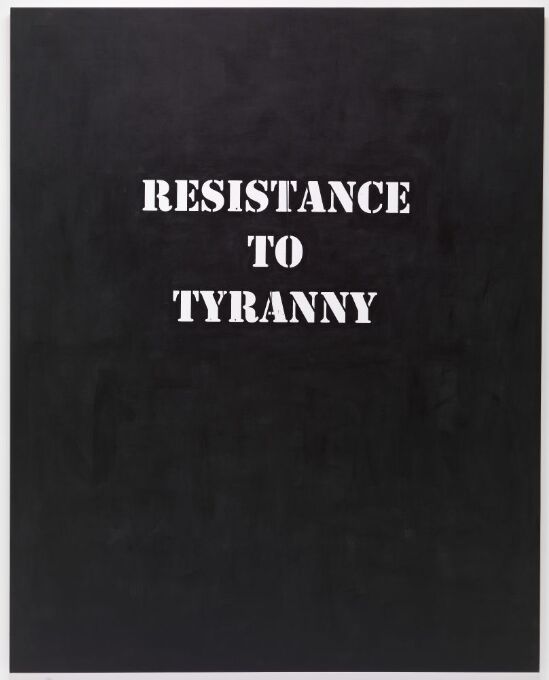
Untitled Wallpainting (Total Revolution), for example, is a work of art that takes a spontaneous street tagging and transforms it into a work of art. Now the slogan is written on a white gallery wall with letters that are painted with stencils, which renders the once aggressively written ustatement into a calculated and pre-fabricated “instruction piece” ready to be set up again in any gallery context.
- Creation date:
- 2001
- Other titles:
- Untitled Wall Painting (Total Revolution) (NOR)
- Object type:
- Painting
- Materials and techniques:
- Akryl på vegg
- Keywords:
- Visual art
- Classification:
- 532 - Bildende kunst
- Inventory no.:
- NMK.2005.0270
- Cataloguing level:
- Single object
- Acquisition:
- Purchased 2005
- Owner and collection:
- Nasjonalmuseet for kunst, arkitektur og design, The Fine Art Collections
- Photo:
- Annar Bjørgli/Høstland, Børre
- Copyright:
- © Einarsson, Gardar Eide/BONO
Nasjonalmuseet's collection catalogue is a living resource of information gathered since the 1830's. Some records may contain language or ideas that today could be perceived as outdated, offensive or discriminatory with regard to for instance gender, sexuality, ethnicity or disability, and that may be at odds with the museum's values regarding equality and diversity.
Do you have suggestions for how this record can be improved? We would like to hear from you!
If you would like more information about specific objects in the collection or about objects that haven't been published online, please contact the museum. You can read more about how we work with the collection and our cataloguing practice here.